Friday, March 17, 2023

Eighth Post- Angles, Shots, and Group Film


Image Link: https://i5.walmartimages.com/asr/022abb70-2de2-455d-acc2-a54718a72862_1.5cf822edf93d0861f2b61f3634b7ef93.jpeg

Utilizing film stock versus a digital sensor in recording images is the first decision a cinematographer must make. Film stock requires cutting and taping of physical film strips and is purchased by the foot. The stock used to be made of nitrate, a highly flammable ion causing the film strip to burn frequently (Sharman). Film strips now are made of plastic with gelatin and silver halide crystals (Sharman). Light hits the crystals and the crystals darken. Red, green, and blue crystals allow for film colorization. Light can also pass through a camera lens and hit a digital image sensor. Software converts the light bouncing off the sensor into still images, and the images can be stored with a hard drive. I have a new-found appreciation for black-and-white film after reading the text. Black-and-white films are useful for dark subject matters and are prominent for filmmakers aiming for nostalgia. Films without color can be tough to construct because lighting and shadows need to be maintained as if the film had color. Light fixtures in the camera’s frame likely have no effect for the lighting in the film. Motivating the light source and direction refers to light fixtures appearing in the frame, but out-of-camera lights performing the lighting. Hard lighting results in hard-edged shadows and is rather intense and focused on the subject (Sharman). Soft lighting is more diversified and even throughout the frame, and shadows are fuzzier or are not clear. A smaller light source closer to the subject depicts hard light, while a larger light source farther from the subject can signal soft light (Sharman).

Close-up camera shots indicate intimacy with the frame’s subject. Extreme long shots may be shown to convey disconnection between the subject and another person or idea in the film. A medium long-shot shoots from the knees up and a medium shot from the waste up. I think our film would benefit from incorporating many different shots to give the viewer different perspectives of the subject and background. Filming shots with negative space can isolate our subject and question the subject’s fit in relation to the objects composing the rest of the frame. Tilting the camera, or moving the camera up and down from a fixed position, will enable us to highlight top and bottom shots of our object. Panning the camera from side-to-side will allow for more of the background to be seen. Dolly-ins and dolly-outs will contribute to the intimacy or disconnection a viewer may feel with the centerpiece in our film. Editing in film allows unnecessary time and events to be removed and increases the rhythm present. I never realized a shooting ratio of 10 to 1 existed, symbolizing shooting 10 times the amount of film needed for screentime (10 hours shot for one hour of screen-time).

Our group is going to make a film about a chair. We are not sure on the details yet and hope to keep an element of surprise. A cutting-on-action shot switches shots in the middle of an on-screen action. We could have a person about to sit in the chair and then switch to a shot with the person already in the chair. An eyeline match-cut can also serve purpose. The camera is fixated on one of our group members, before immediately switching to a shot of the chair. Jump cuts could be used when the chair moves locations to signify the passage of time. If a person is talking off-camera with the chair as the only subject in camera, we could have the person then come on camera while continuing to talk. The shot without the person to a shot with the person would be a J-Cut. A master-shot will be essential in setting the location of the chair at different points in the film. Coverage shots will establish our group members’ relation to the chair throughout the film. If we have two chairs in the film, we can use cross-cutting shots to go in-between scenes from each chair. A wider lens would enable more of the frame background to be seen with increased space. A telephoto lens is a narrower view making the character or chair feel father away. We can incorporate both lenses into our film for depiction of the chair. The chair can be an imposing force if we place it in the center of the frame. Push-ins and push-outs allow us to come closer to the chair or back away from the chair. Moving closer would signal an impending suspenseful moment and pulling away would indicate status quo.


Saturday, March 4, 2023

Seventh Post- Get Out Reflection


Image Link: https://www.ebay.com/sch/i.html?_nkw=get%20out%20movie&norover=1&mkevt=1&mkrid=711-34001-13078-0&mkcid=2&mkscid=102&keyword=get%20out%20movie&crlp=_2-1300-0-1-1&MT_ID=&geo_id=&rlsatarget=kwd-77103460544530:loc-190&adpos=&device=c&mktype=&loc=101517&poi=&abcId=&cmpgn=418333415&sitelnk=&adgroupid=1233652282691736&network=o&matchtype=e&msclkid=dbf9606638b81b27571f0465b8d39c30 

Get Out began with a Black man being kidnapped and never seen again. I realize Peele was quickly setting the tone for the movie. The car turned around, for no reason, other than the person walking down the street being Black. One streetlight lit up the sidewalk and frame. The abduction and kidnapping foreshadowed future events, as Chris was held hostage in the Armitage’s’. The film began with an establishing shot showing Chris’ apartment or condo. Peele utilized a montage to show some photos Chris took as a photographer. Rose, lying to Chris, mentioned he was her first Black boyfriend and discussed plans with him to visit her parents’ home. Traveling to Rose’s parents, she and Chris see and hit a deer. Revealing his sensitive side, Chris got out of the car to stand at the edge of the forest and stare at the dead deer. A foot shot and faraway shot are used to show Chris’s location relative to the forest. The officer asked Chris for his license even though Rose was driving the vehicle in the accident.

As Chris and Rose arrive at her parents’, an establishing shot shows the house and Rose’s parents coming to greet them. Chris is perplexed by Walter and Georgina, a groundskeeper and maid who work for the Armitage’s’. Dean, Rose’s dad, asked if Chris smoked. Missy, Rose’s mom, tapped her tea glass for the first time (she would later stir the glass to hypnotize Chris). A dinner conversation between Jeremy and Chris explained the Armitage family’s interest in Black people, as Jeremy wanted to discuss Chris’s physical and genetic makeup. Chris was asleep when he began having visions of the forest with the deer. He arose and went outside to clear his head, following a strange shot of Georgina walking behind and staring at Chris as he went outside. Chris was in the backyard and about to smoke. He is shocked and relieved when a sprinting Walter comes right for him but misses him at the last second. The scene was a long-wide-shot of Walter sprinting at Chris and a close-up of Chris’ face to catch his reaction as Walter veered at the last second.

The story significantly shifted as Missy invited Chris to sit down with her to talk about his smoking (Missy had the tea class in her hand). Missy stirred her tea as she probed Chris about his whereabouts on the night his mother died. Attempting to lure Chris into the “heightened sensibility” phrase of her hypnosis, she wished Chris to “find the rain” on the night his mom died. Chris, clearly not wishing to discuss the topic, found the rain and became very emotional. Missy exacerbated Chris’s emotions and guilted him into wondering why he did not do anything to find his mother. Chris began tapping the surface of the chair, a tactic he used when he first sat with Rose and her parents, and a tactic seen in his flashback to the night his mom did not come home. The tapping may signify Chris feeling uncomfortable and/or nervous. Missy then asked if Chris was at fault for his mom not coming home, causing Chris to become paralyzed. He began “sink[ing] into the floor” and into his childhood bed. He appeared to be floating in the air. A close-up conveyed a wide-eyed and teary-eyed Chris in a chair across from Missy, immediately followed by a point-of-view shot from Chris’s perspective into Missy’s face. Missy appeared on a distant screen from Chris, who was falling in the air and looked to be in “the sunken place.”

Chris then woke up in a sweat and ventured into the forest behind the Armitage’s to take some pictures. He saw Georgina in a window and desired to take a picture, but quickly withdrew upon Georgina spotting him. Walter told Chris he knows who Chris is and apologized for almost running into him. He then asked Chris if the meeting with Missy worked in curing Chris’s urge to smoke. Chris did not have the urge to smoke anymore, but he had thought the meeting was only a dream. Rose and her family hosted a party for her grandfather, and most guests (besides Hudson the photographer) made tone-deaf comments toward Chris. Guests felt his shoulders, asked Rose about Chris’s romantic prowess’s, and commented “Black is in fashion.” Chris met another Black man named Logan, who is later recognized as a musician who has been “missing” for the previous six months. Logan, like Georgina and Walter, acts almost robotic-like to Chris and may have been hypnotized. Georgina unplugged Chris’s phone sometime during the party and apologized, sort of, for the unplugging. She claimed she “answered to no one” and said the Armitage’s “treat [me] like family.”  Back outside, Logan is asked about his experience as an African American. He explained his experience has been mostly “very good.” Chris snapped a photo of Logan, causing Logan to go into a tantrum and yell “Get Out!” to Chris. Chris, in an action making sense later in the film, claimed to have known the guy coming at him when the flash went off. He did not know Logan, but he knew the face of the guy whose name was Logan (given by his much-older girlfriend). The camera cut to Dean when Chris said he recognized Logan’s face, so I assumed Chris thought of Dean somehow when Logan came charging at him.

Rose and Chris came back to the Armitage house after a walk, and we saw the whole family together for the first time. Walter and Georgina stood on the pathway smiling, Jeremy was sitting playing the ukulele, and Missy and Dean stood around each other. The whole family was staring at and waiting for Rose and Chris to enter the house. Chris’ friend, Rod, reminds Chris “Logan” is Andre Heyworth, a friend the two of them knew from back in the day. This phone call with Rod instilled a sense of urgency in Chris. He knew he needed to get out of the Armitage house. Chris told Rose to find the keys and went into a little closet with a red box. The box contained several photos of Rose with her previous boyfriends. Her previous boyfriends were all Black, contrary to her telling Chris he was the first Black boyfriend she ever had. Jeremy blocked the front door and the whole family enclosed Chris as he tried to escape. Suspenseful music marred the scene, as Dean began reflecting about mortality and fire as he stood right next to the fireplace. Jeremy swung at Chris, and Rose, who couldn’t find the keys the entire time, eventually found them. She dangled the keys in front of Chris and said: “You know I can’t give you these, right babe?” Missy tapped the tea glass, and, as before, Chris became hypnotized. Chris is dragged into the basement and is depicted in “the sunken place” again with the faces of Missy and Rose distant on the screen. An establishing shot is used to show Chris is in the Armitage basement and a close-up zoomed in on Chris’s face as he was handcuffed to a chair.

A television screen is placed in front of Chris’ chair in the basement. Roman Armitage, the patriarch of the family, appeared on the screen to tell Chris he had been chosen by the family for the “physical advantages you’ve enjoyed your entire lifetime.” Missy followed on the screen with the stirring of the tea again. Rod called Chris’ phone a third time after not hearing a response the first two times. Rose picked the phone up and changed the subject to her and Rod as opposed to focusing on Chris’ location. Dim lights lit up Rose’s face in the call, as she could not remember the cab company Chris used to take home. A recorded message on the television screen appeared for Chris. The message highlighted the three steps in Armitage’s program: hypnotization, mental preparation, and a surgical procedure with part of the brain. Chris would have limited consciousness and exist “as a passenger,” similar to Walter, Georgina, and Logan. He ended up freeing himself from the chair and killing Dean and Missy. Chris hit Jeremy with an object in the head, and after Jeremy woke back up, was able to strike a fatal blow to Jeremy with a knife. Georgina was hit by Chris as he drove off from the Armitage’s and Chris felt bad enough to stop and bring her into his car. She woke up and punched Chris, causing Chris to stop the car and encounter Walter and Rose. Rose attempted to shoot Chris, and Walter, instead of tackling Chris, shot Rose before shooting himself. Chris started to choke Rose, with a low angle shot pointing up to Chris (he was in a dominant position and in power over Rose).  Rod arrived on the scene in a police car to drive Chris away, leaving Rose to bleed out and die.


Sunday, February 26, 2023

Sixth Post- Sofia Coppola as Auteur


        Link: https://madmovieman.com/3060-marie-antoinette-2006/

One of the defining characteristics in a Sofia Coppola movie is the main character glancing out a window. In her Marie Antoinette film, Coppola has Antoinette peer out windows in several shots. Antoinette can be seen with her head against the window during a carriage ride early in the film, after asking to be excused from an event with her husband. She stares out a window in one of the film’s final scenes while leaving Versailles. Louis XVI, Antoinette’s husband, and Antoinette left Versailles in France just before a mob destroyed the palace. Louis XVI asked Antionette if she was admiring the view when staring out the window, but she remarked she was saying goodbye. The film stressed the importance of Antionette conceiving a child so an heir to the throne would exist. Antionette received substantial criticism from Louis XVI’s clan in belief she was the reason for the unconsummated marriage. She made an effort, a forced effort, to love the king and seduce him. The king could only think about how tiring his swimming and hunting excursions made him. Joseph II, Antionette’s brother, talked to Louis XVI about romance in terms of key-making and the king and Antionette ended up with a daughter (and then a son and another daughter). Even after pleasing French royalty by producing an heir, Antionette is still limited in her freedoms as royalty. She could not have anything foreign from Austria when she became engrained with France and could not feed her own baby due to protocol. Antionette established a party and gambling reputation while holding an affair with Count Fersen of the Swedish Army.

In Marie Antoinette: Fashion, Third Wave Feminism, and Chick Culture by Suzanne Ferris and Mallory Young, the authors discuss the meaning of chick culture. The phenomenon refers to American and British media forms arising in the 1990’s centered around twenty-to thirty year old college-educated women. Chick culture attempts to explore the intersection of third wave feminism, consumerism, and popular culture (Ferris and Young 98). The third-wave revision requires the audience to see events from Antoinette’s perspective, as a fourteen-year old archduchess separated from family and forced to live with strangers in a foreign court (Ferris and Young 99). Coppola utilized letters written between Antoinette and her mother to establish audience identification with the main character. The director claimed Antoinette was a “lost girl, leaving childhood behind,” who would grasp “the final dignity of a woman” (Ferris and Young 100). Antoinette could be portrayed as a “real girl… who tried to find her own way” (Ferris and Young 100). The film’s opening is wordless, with uses of pop music and an observable teen queen. Viewers are invited into Antoinette’s space when she is shown eating cake and looking squarely into the camera. Antoinette proceeds to wake up from her bed in the next scene, with her hair messy and her face “peaceful (Ferris and Young 101). She plays with her dog, Mops, in her bed, and Coppola portrays this scene to be in a time period no different than the current one. Coppola’s message stepped aside from history and related to Antoinette being an “ordinary girl caught up in extraordinary circumstances” (Ferris and Young 101). Pop music was non-diegetic and diegetic, as the characters hear in a scene at the masked ball. All accounts of Antoinette, and third-wave feminism, address the convergence of fashion and identity. Coppola illustrates Antoinette’s changing of outfits at the French border, no longer a part of the Austrian court. Antoinette is rebranded and stripped of any belongings reminiscent of Austrian culture. She arrived in a white gown, a blank canvas. Through costume design, Antoinette was forced to participate in the luxurious gowns of Versailles fashion (Ferris and Young 102). She is supposed to be the person with power, but Coppola pronounces Antoinette was a victim. The Queen was forced to strip naked several times and questioned protocols when the honor to dress her changed several times in the span of a few seconds. She overcame submission with respect to fashion, as she was able to define herself through attire chosen by her. Coppola emphasized the dress as an expression and definition of self, even “stylizing” the costumes instead of vying for the “expected classical look” (Ferris and Young 104). Colorful sets, elegant food displays, and the Versailles palace added to a gratifying appeal. Pop music mixed with the eighteenth century, and the color pink, signature of post-feminism, was presented profusely. Pink hats, ribbons, shoes, and desserts exemplified the meaning of pink to third-wave feminism. Antoinette appears in over 60 gowns, first submitting to French culture and then rebelling to define her own fashion style as Queen of France (Ferris and Young 105). Fashion also linked to sexuality, as the pressure of Antoinette to produce an heir and have a consummate marriage was perverse. Coppola portrayed Antoinette upset about the sexual desire of Louis XVI. She incorporates a scene from chick culture with Antoinette and her friends trying on loads of shoes and jewelry, drinking champagne, and eating a pink-and-white treat. The song throughout the scene, “I Want Candy,” reinforces Antoinette’s child-like innocence (Ferris and Young 106).

Coppola utilized a few different camera angles, including long shots to show the French landscape. While Antoinette is greeting dignitaries arranged in two lines around her, the camera performs a point-of-view shot. A viewer sees the dignitaries’ faces and expressions from Antoinette’s perspective. Some scenes showed Antoinette and had voiceovers from people talking poorly about Antoinette who were not in the scene. Coppola sets aside historical accuracy, as the Queen would not be able to remove herself out of the constant companionship by flatterers, to probe at our sympathy (Ferris and Young 108). Antoinette was an outsider in her own reign.

Coppola included a key component of film third-wave audiences expect: romance. She invested heartily in portraying the intimacy between Antoinette and Count Fersen. The masquerade ball scene, the bedroom play, and countryside escapes all converge in “chick-flick tradition” ((Ferris and Young 109). The director allowed Antoinette to live, stopping short of Antoinette’s death by the guillotine. Antoinette’s costumes appear devoid of color in the final scenes, signifying an end to the pleasurable and indulgent lifestyle. Her main objective is protection of her family, as she maintained multiple times she should stay with her husband. The act depicting Antoinette bowing to the crowd is an act of mercy, and Coppola engaged the audience in thinking the death of her and her husband could have been an unjust act. Antoinette remained alive in the film and could be seen as a third-wave heroine ((Ferris and Young 110). A movie review by L.V. Jeffrey highlighted the importance in Coppola’s preference for style: “Coppola continues to fascinate by giving professional creative voice to all the girly-girls in the world, ever arguing that they’re a major subset of society.” The society is one we “would be foolish to offhandedly dismiss” (Ferris and Young 111).

An article entitled Off With Hollywood’s Head: Sofia Coppola as a Feminine Auteur, by Todd Kennedy, traces Coppola’s style through her different movies. The gaze, discussed with Rear Window, is used by Coppola. In The Virgin Suicides, the viewer is tempted to lust over the Lisbon sisters. In Marie Antoinette, the viewer may lust over pastries or shoes (Kennedy 41). The spectator becomes aware of the gaze by participating as a voyeur into the events happening on screen. In Marie Antoinette, Coppola grants power to Antoinette when she retorts into the camera “What are you looking at?” after Antoinette is seen lounging on a chair in a seductive manner. The audience became aware of the gaze as Coppola challenges woman as the object of a spectacle (Kennedy 48).  Every aspect of Antoinette’s life appears on display, including being surrounded while eating and visitors intruding on her privacy. Crowds are present for her wedding night and birth of a child, and crowds judged her in the opera house. Antoinette became somewhat empowered through consumerism, by buying and/or wearing new clothes. The wearing of new clothes does not only signal femininity but allows for multiple forms of feminine identity. A powdered wig and taffeta allow Antoinette to become French dauphine. Coppola’s protagonists all struggle with feminine agency, leading to consumption and leisure (Kennedy, 41).  The director takes the quest for identity (mostly a masculine concept according to Kennedy) and creates a feminine perspective, questioning the methodology resulting in women always having to consume (Kennedy, 41).

In Lick the Stars, Coppola relied heavily on the perspective of a young female named Kate. Kate, like Antoinette, was lost in foreign surroundings while attempting to determine her identity. The school structure dominated the characters in the short-film, similar to Versialles dominating over Antoinette (camera angles help the perception). The girls in Lick the Stars were without a voice. A “masculine principal’ was stationed over the camera. He exerted power on Kate and her friends with a point-of-view camera angle, as the group broke the rules (Kennedy, 42). The Virgin Suicides dealt with a group of girls being objectified and led to the question of committing suicide. Coppola’s films explored the objectification, idealization, and definition of female characters by the film and by society. Antoinette in Marie Antoinette is limited by the image and identity imposed on her by society. In Lost in Translation, Coppola depicted an unconsummated relationship in Charlotte and Bob. Bob, portrayed as the “wiser” of the two, was more lost than his younger love interest, Charlotte (Kennedy, 47). She wished to highlight a culture of absence in a world defined by a culture of excess. Bob and Charlotte attended strip clubs, karaoke bars, and Buddhist temples, but the cultural glow ended as a farce (Kennedy 47). Culture in the film is absent, as the film is did not have  interest in portraying a true Japanese culture. Marie Antoinette follows the Queen engulfed in a culture she does not feel connected to. She had to be bored by the mundane daily routines and limited freedom she had in her clothing choices, feeding her baby, and inviting her own guests to functions. Coppola expresses culture can lack substance even if perceived to be grand and amusing.

Citations:

Ferriss, Suzanne and Mallory Young. ““Marie Antoinette”: Fashion, Third-Wave Feminism, and Chick Culture.” Literature/Film Quarterly, vol. 38, no. 2, 2010, https://www.jstor.org/stable/43797666?casa_token=jNKkimehREsAAAAA%3AQhSJBW6pOhEakz2Trjrtwsvsuj7lcudAp75hVaDyY3NVsVCFCtz57X0ZWRgBqqrYQm2q4PxNJ6FgMs4NINcNS1m3rhmdeKHe2iarQW6i5j9oKOPdl8Y. Accessed 26 February 2023.

Kennedy, Todd. “Off With Hollywood’s Head: Sofia Coppola as Feminine Auteur.” Film Critics,. vol. 35, no. 1, 2010, https://www.jstor.org/stable/44019394?casa_token=J9uuCTTaCcUAAAAA%3A3lndRpHD5RNNJ6mnS9LoDOW6PJ6ptaSroP7Mg26YQylo5ky60oKeMyJcT1-i-R9Cx7_Edz74Ja9hLgssaM96pBMjpLVZsf4yoItSH0I4-55Zx-hLzxs. Accessed 26 February 2023.

 

Monday, February 20, 2023

Fifth Post- Rear Window Camera Shot and Reflection


       Image Link: https://www.studiobinder.com/blog/point-of-view-shot-camera-movement-angles/ 

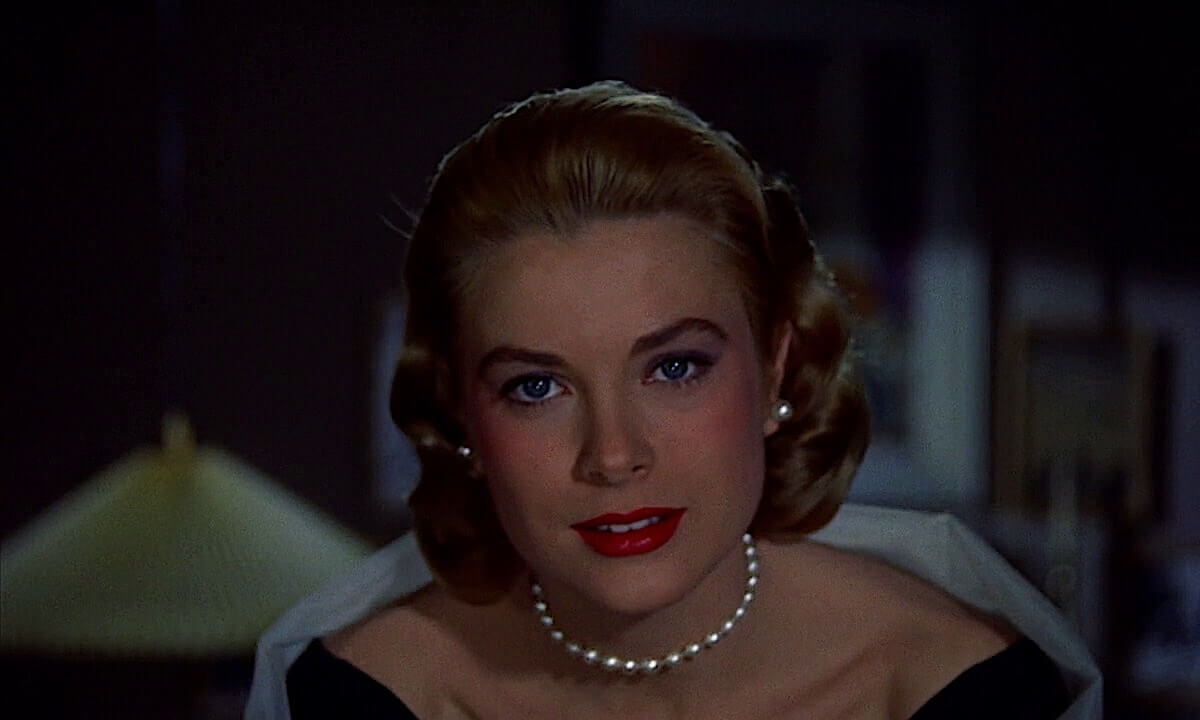
The above photo of Lisa is stunning and the product of magnificent camerawork. A dark background contrasts with her face, as Hitchcock utlilizes low-key lighting to make her the center of attention. Jeffries is sleeping and Lisa hovers over him and is about to give him a kiss before he wakes up. Jeffries had been talking to Stella about the possibility, or lack therof, of marrying Lisa. Stella advocated for the marriage, claiming when two people fall in love they "should come together." Jeffries maintained Lisa is "too perfect, too talented, too beautiful" for him. He worried in his conversation with Gunnison about a husband coming home to a nagging wife, even whilst Gunnison attempted to convince him wives discuss. Marriage is drastic to Jeffries. He wants a woman who "will go anywhere and do anything."

StudioBinder defines a point-of-view (POV) camera shot as an angle showing the sightline of another character "in the first person" (StudioBinder). The camera serves as the eyes of the character and our view is the same as the character's view. We see the same as Jeffries sees. The camera is positioned between Lisa and Jeffries' faces. Jeffries is looking at Lisa, and we see Lisa's reaction. A first-person POV shot is meant to make the audience experience the emtions the character is experiencing (Nashville Film Institute). John Belton, in his article The Space of Rear Window, explained Lisa appeared "out of the dreams of the still-sleeping Jeffries" (Belton). Hitchcock chose this photo as our first glimpse of Lisa. A viewer sees the sophistication, elegance, and beauty of Lisa mentioned earlier by Jeffries. The stage is set for Lisa's role in the film, as she will be by Jeffries' side as his love interest.

Belton discussed filming aspects of Rear Window in his article. He highlighted the nuances with each character's apartments. Miss Torso's apartment had ample open space because she was a dancer and moved around frequently. Thorwald's apartment was segmented by two seperate windows for the kitchen/living room and the bedroom area. The two windows seperated Lars from his wife, who remained in the bedroom while her husband kept a prescence in the living room. Miss Lonelyhearts, who also had a segmented house, moved from room-to-room (kitchen to table, etc.) to fill in the empty space (Belton). Hitchcock utilized short-wave radios to communicate with his far-away actors. The actors were equipped with flesh-colored receivers. Belton acknowledges the fixed camera perspective (from Jeffries' apartment) may normally limit the amount of subplots or other character actions the viewer can see. Hitchcock eliminated the problem of missing key information by building the subplots (other apartments) into the set design. Since Jeffries' cannot move, he can only interpret the events he sees and hears from one location (Belton).

 Belton Article Link


Thursday, February 2, 2023

Fourth Post- Chapter 2: Stanley Kubrick and One-Point Perspective


     Link: https://www.pinterest.com/pin/455919162271169689/

Recurring patterns, or motifs, help identify the theme of a film or director’s style. Sound design, including music and dialogue, narrative structure, and mise-en-scene showcase motifs. Mise-en-scene analyzes a production’s visuals such as set design, costumes, and make-up (Sharman). The one-point perspective is a set design and recurring pattern employed by filmmakers to focus our attention on a scene’s subject in relation to a vanishing point and horizontal line (Nguyen). Stanley Kubrick was a filmmaker known for his consistent use of one-point perspective, especially in horror films. In the above picture from Kubrick’s The Shining, we see the vanishing point as a circle serving as the point of intersection for all the horizontal lines. Danny, the kid in the picture, is sitting on the floor. Our eyes move past Danny and all the way to the barrier, the door, at the end of the hallway. No further sightline is provided past the door. The hallway narrows the viewer’s attention to a long strip and the symmetry along the walls enhances our eyes to the back door or Danny sitting on the floor. Danny’s placement on the floor is too near the camera to be the subject of the vanishing point, but the image of Danny and the entirety of the hallway allows the audience to experience the scene with him. I watched The Shining my senior year of high school in an English class, and I felt tense watching the above frame. Kubrick desired the viewer to enter scenes from behind the camera and experience the suspense an action was going to occur (even though a hallway is the frame’s focal point) (Antunes).

A long shot typically makes us feel further away from the character(s), negating the ability to feel connected to the character’s situation. Kubrick’s use of a long shot is different. The character is not placed at the edge of the frame or the very back of the shot. Danny is near the front of the shot, with a sizable amount of open space behind him. One-point perspectives allow the viewer to see the scene from the character’s perspective and guess whether an act will occur to break the frame’s calm sense (Tibbs). Miguel Para, a filmmaking instructor at the New York Film Academy, emphasized: “Kubrick and his one-point perspective shots force you to look at the world differently. When you crouch down, you’re looking at the world from the point of view of somebody of that height – a child perhaps” (Tibbs). Para encapsulates the photo shown, as the camera is located right above Danny’s head as he squats down. The location of the vanishing point will determine a viewer’s perspective. A vanishing point located on the same side as the main actor of object will restrict the depth created (NG Production Films). The actor or object can be on one of frame’s sides and the vanishing point on the same side and positioned in the back. Most filmmakers, including Kubrick, decided on centering the actor/object and the vanishing point (as in the picture), with the point a bit higher in the horizon line (NG Production Films). The photo I used is one example of Kubrick’s penchant for one-point perspective. As shown in the collage in the chapter, he uses the perspective many times in The Shining and his other films.

As Sharman explains, a film’s form and content allow for a cinematic experience larger than the summation of its parts (Sharman). My biggest takeaway from the chapter is the importance of an implicit theme in film- a message the viewer will take away no matter how well of an understanding he or she may have of the plotline. Individual shots alone cannot create a film, multiple shots need to be juxtaposed and edited so a pattern can be established. Patterns provide viewers an opportunity to engage with a film and allow for cinematic language to evolve. Sharman highlights the difference in composition between cinema and art forms such as painting and photography. Painting and photography frame the images and objects inside the border (the camera or the material being drawn upon). The frame in painting and photography is fixed, as the artist cannot move the content after taking the picture or creating the painting. Cinema allows for movement in composition. Movement occurs within the camera frame of characters and objects (Sharman) and of the frame by allowing the viewer to see different aspects of a set and a mutiple viewpoints of a character's inner thoughts and physical characteristics. Many shows I have watched utilize a close-up or medium shot. The object or character in the scene covers most area in the frame. The one-point perspective is a technique I do not see frequently, but the perspective allows the viewer to see a larger portion of the set and experience the character's surroundings.

Friday, January 27, 2023

Third Post- The Cabinet of Dr. Caligari


Link: https://pdsh.fandom.com/wiki/Doctor_Caligari. 

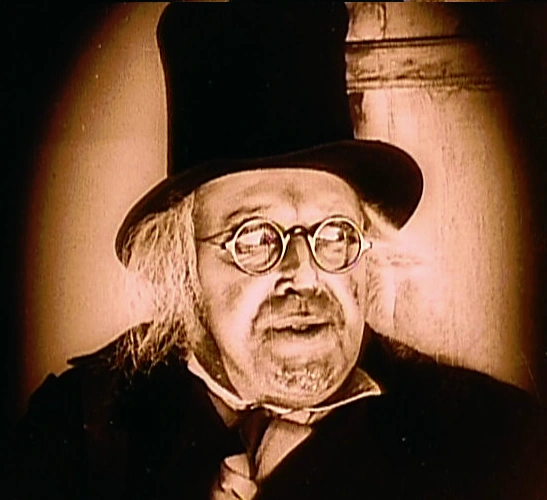
Films enriched with German Expressionism highlighted melodramatic acting and the portrayal of characters’ feelings (Britannica). The Cabinet of Dr. Caligari is considered the oldest horror film and a staple of German Expressionism. The film utilizes several fade-ins and fade-outs for transitions, with the shrinking black holes on the screen at a scene’s end and the opening of a black screen to convey the start of a scene. Francis is the main character of the film, as we experienced Francis’ reactions to events such as Alan’s death, Jane’s kidnapping, and his doubt regarding the intentions of Dr. Caligari. The sound design fits the film, as suspenseful music played when the town clerk was killed, but a jollier tone of music appeared when Francis first met Alan. The music was non-diegetic, as the characters in the film could not hear the music, only the audience could. The shapes and lettering in the film were sharp-edged and pointy, especially with the introduction of the film’s cast and the windows and houses. German Expressionism features such as lopsided doors, tiny rooms, slanted city lines, and dark shadows were scattered throughout the picture (Filmsite). One of the biggest frustrations of the film was watching the characters’ lips moving but not being able to hear them speak (the subtitles helped with this though).

The film begins with Francis and an older man sitting on a park bench, while Francis explains how spirits have driven him from “hearth and home, from wife and child.” He seems to be isolated from his loved ones and living in a different reality than would be ideal. Jane, who Francis claims to be his fiancée, walks by with the older man still at Francis’ side. Jane’s bright white dress contrasted sharply with the dark-colored suits of the gentleman. Our first glimpse of Dr. Caligari is a full frame shot of him walking. A Caligari headshot and a black screen appearing as a transition follow.  Alan is introduced as Francis’ friend in a room with the window shadows painted on the floorboards. Alan suggests to Francis the pair check out the Holstenwall Fair for different kinds of entertainment. Dr. Caligari is seen discussing with the town clerk about gaining a permit for a spectacle at the town fair (a somnambulist act). The music intensifies as Caligari first appears with his somnambulist, Cesare, at the fair and the first act is concluded. Act II begins with a punch as the town clerk has been murdered on the same night as Dr. Caligari’s appearance at the fair. The clerk was stabbed in the side with a pointed instrument. The crime does not deter Alan from trying his luck with Dr. Caligari’s fair exhibit, to the annoyance of Francis. Cesare is kept in an upright coffin, called a cabinet, and has been asleep the previous 23 years. Dr. Caligari explains he can awaken Cesare on command, and of the fact Cesare knows all secrets and can see the future. Alan asks Cesare how long he will live, followed by Cesare’s reply of “Till the break of dawn.” By the end of Act II, Alan, who was seen with Francis discussing loving Jane, was stabbed to death. Act III begins with Francis exclaiming “The somnambulist’s prophecy” in relation to finding out Alan is dead. Robert Wiene, the film’s director, then utilizes a dissolve to show Francis talking with authorities and exclaiming he will find the murderers of the clerk and Alan. The clerk’s murderer in Holstenwall was found and he was a bit stockier than Cesare (who I thought would be the murderer). Alan’s murderer was thought to be the same murderer who took out the town clerk (and almost an elderly women) based on the headline “Holstenwall mystery solved- Murderer caught in 3rd attempt.” Francis and another man are shown going to Dr. Caligari’s home to see him and Cesare (who is in the cabinet).  Act IV begins with Jane worried about her, Dr. Olfen (he was the one who went to go with Francis to Dr. Caligari’s house), being gone with Francis. The man charged with the two murders maintained his innocence: “I had nothing to do with the two murders… So help me God.” He admitted he did try to kill the elderly women with a knife like the one used to murder the town clerk. Jane receives her first encounter with Dr. Caligari and Cesare and immediately runs away in fear. Francis almost goes into the door of Dr. Caligari’s exhibit at the fair but backs away and ends up at Dr. Caligari’s home. As Jane is sleeping, Cesare pulls a panel out of her window and enters her room. He then abducts her and runs until being captured by the authorities. Jane wakes up and maintains Cesare was her abductor, with Francis rebutting it couldn’t have been Cesare because he was watching the somnambulist asleep (end of Act IV).

Act V focuses on the hunt for the true murderer. Francis wants to ensure the murderer is safe in his cell and the stockier man is shown in the cell. Francis goes to see Cesare at Dr. Caligari’s residence but is surprised to see a dummy of Cesare in the cabinet. Caligari runs away upon Francis realizing the dummy and the doctor runs into a “lunatic asylum.” Francis asks someone at the asylum if Dr. Caligari is a patient at the asylum, before finding out Dr. Caligari is the asylum’s director. While Caligari is sleeping in his villa, Francis and company search Caligari’s office at the fair. The group finds a book on somnambulism by the University of Upsala with a section titled “The Cabinet of Dr. Caligari.” In 1783, a mystic named Caligari toured villages for fairs in northern Italy. Accompanying Caligari while touring the fairs was a somnambulist named Cesare. The legend continues Caligari would create panic among the villages through “foul murders committed under almost identical circumstances.” Cesare was controlled by Caligari and the somnambulist carried out schemes orchestrated by Caligari. A puppet- a look-alike of the actual Cesare- would take Cesare’s place in Caligari’s cabinet so suspicion would be deflected from the real somnambulist.

Francis and the group find and read Dr. Caligari’s diary after finishing the book. His diary includes the date March 12th, with the word “Finally” written in relation to Cesare being brought into the asylum for admission. Dr. Caligari’s wish is to discover the secrets of the mystic Caligari from 1783. An obsession by Caligari led him to wonder if a somnambulist would perform acts as a sleepwalker that he would not think to perform in a true walking state. Suspenseful music is played while Francis is relaying the diary to the others surrounding him. Dr. Caligari was determined to become the mystic Caligari as Act V concludes. The final act is Act VI, beginning with a sleepwalker (Cesare) being found and picked up in the fields and brought to Caligari’s office. Francis desires Caligari to unmask himself and tell the truth by saying he is the director of the asylum. Caligari does not unmask himself and instead tries to strangle one of the officers (who looked to be dressed in lab coats). The film then cuts back to the original scene of Francis and the old man, as Francis was telling a story this entire time. Francis tells the man “And from that day on… Caligari never again left his cell.” He goes back to the asylum, where he sees Alan and Jane. Awed by the sight of Jane, Francis asks her to marry him. Jane responds with: “We queens are not free to answer the call of our heart.” The film concludes with a more elegantly dressed Caligari (and without his glasses) emerging onto the floor of the asylum. Everyone in the asylum thinks Francis is insane after he starts screaming and waving his hands upon Caligari’s arrival (the melodramatic acting staple of German Expressionism). Francis claims Caligari is the insane one, tries to strangle Caligari, and then is tied up and assumedly thrown in jail. Caligari ends the film by proclaiming: “Now I understand [Francis’] delusion. He thinks I am that mystic, Caligari. I know exactly how to cure him.”

The above summary of the film was from notes I took while watching. I never realized Francis was a patient at the asylum until doing further research (Filmsite). Wiene did a nice job in making me believe Francis’ account of the story until the very end. Learning of Francis’ delusion nullifies the entire plot of the story, as Francis made the entire story up (quite impressive). I thought the intensity peak would be Jane’s abduction or Alan’s stabbing but seeing a normal Dr. Caligari in the asylum takes the cake.

 The Cabinet of Dr. Caligari (1920) wrapped production a few years after Germany decided to ban foreign films (1916). German audiences sought films with cultural relevance in dealing with World War I (Movements In Film). Cruelty and violence replaced romance as high interests in German households. Filmmakers focused on character symbolism as opposed to character development. Events in a film were viewed from a certain character’s point of view and mental state rather than from the rest of the world (world is only etched in a timeframe) (Britannica). The lead character in Expressionist films will express his or her tales with the most important words and keep the dialogue short and meaningful. Francis is seen talking, with the subtitles, in short spurts and sometimes in sentence fragments. The subject of Francis’ mental state appears at the film’s end, during the plot twist, as we see Francis is a patient in the asylum who fabricated the whole “flashback” of the film. Francis’ dialogue represents the most important aspects of his thoughts and allows the viewer to quickly see his line of thinking. Street shapes and set designs, including sharp window and house designs, can be seen as Francis’ take on the world. The characters he encounters are more symbolic than real-life “friends.” The entire plot line has no character development, but only focuses on emotions. Alan being in a joyful state about seeing the somnambulist, Dr. Caligari being secretive behind closed doors and accepting at the fair of his somnambulism operation, and Francis remaining determined to capture the made-up evil Dr. Caligari. German expressionists were known for portraying crowded urban scenes with crowded and emotional compositions (Britannica). The Cabinet of Dr. Caligari possesses scenes of the crowded Holstenwall Fair with an intrigued audience for Dr. Caligari’s somnambulist exhibit. Staple Expressionist emotions such as frustration, violence, and anxiety are displayed in the film. Francis is anxious about Caligari and Cesare. Violence is shown with murders and via bouts with Dr. Caligari and Francis wrapping their hands around other individuals. German Expressionism declined in the late 1920’s, as social realism in Germany made unobscured and idealist-inspired modes of communication less relevant. By the early 1930’s, Expressionism was seen by Hitler’s regime as ‘degenerate,’ and Expressionists were censored and unable to publish any works (Britannica).

The Cabinet of Dr. Caligari foreshadows elements of the film noir filmmaking style via contrast lighting, flashbacks, and detail-oriented plotlines (Britannica). Contrasted lighting was prominent in Wiene’s film as he would tilt cameras and darken the settings to reveal the madness of Francis and Caligari (make faces visible). Flashbacks serve as a film noir staple by subjecting the viewer to the narrator or main character’s point of view and storyline for the cause of the situation the character is currently in. Film noir became popular during World War II, to represent the darkness and disillusionment of questionable economic times and atomic powers following World War II. Film noir production occurred because of the Great Depression to reflect the mood of the world. The Cabinet of Dr. Caligari is the first horror film I have ever watched, so I am not sure of films like Caligari. One film with some traces could be It’s a Wonderful Life (1946), a film discussing dark topics of suicide and the differences between fantasy and reality (the film’s protagonist, George, sees how the world would be if he hadn’t been born).

I read a Google scholar article about The Cabinet of Dr. Caligari titled Expressionism and the Real “Cabinet of Dr. Caligari” by Bert Cardullo (1982). He provides a perspective I never considered. Cardullo argues the doctor in Francis’ story is not Caligari. The doctor is the director of the lunatic asylum who pretends to be Dr. Caligari at the fairs so he can experiment with Cesare the somnambulist (Cardullo). The real Caligari is the 1783 mystic who experiments to see if a sleep-walking somnambulist will commit murder. Cardullo concludes both Francis and the director of the asylum are familiar with Dr. Caligari (the mystic) and believes Francis concocted the story about the director pretending to emulate Dr. Caligari to experiment with Cesare. He explains the bizarre scene at the film’s end, with Francis seeing an already-dead (according to his story) Cesare and Jane in the asylum’s courtyard. Francis loses his marbles when the director (dressed neatly and unlike Francis’ version in his flashback) emerges into the courtyard among the patients. Cardullo hypothesizes Francis is the murderer due to believing the mystic Caligari has hypnotized him to commit murder (Cardullo). Francis’ madness is derived from the fact he thinks the director is the mystic driving him to commit the two murders involving the town clerk and Alan. Attempting to rationalize and rid himself of guilt for murder, Francis chooses the director to play Caligari, Cesare to play himself as the murderer under the rule of Caligari, and Jane to play his love interest. Alan and the clerk, who fell victim to murder, are nowhere to be seen in the final courtyard scene. Francis cannot represent the character he desires to be in the film, because he is preoccupied with capturing Caligari (the cause of Francis’ problems). The asylum director, Cesare, and Jane are opposites of the image Francis portrays for them in his lie (Cardullo). Cesare is tidy and gazes spellbound at a flower in the ending courtyard scene. Jane, who Francis claims was his fiancée, does not notice him in the beginning courtyard scene or the ending scene. The director is dressed elegantly in his final act and is seen nodding his head and chatting with an older gentleman (hardly the trace of an evil and cruel personality). Cardullo’s opposites theory continues as Francis turned himself into an opposite persona: a peaceful, sane, and honorable citizen. He needs to be honest and trustworthy to continue his pursuit of the mystic Caligari. Francis selects Cesare to play himself, as Cesare in real life is peaceful and loving (identification with the white flower). Cesare is a somnambulist only in Francis’ tale.

Google scholar link: https://www.jstor.org/stable/44018696#metadata_info_tab_contents.

Friday, January 20, 2023

Second Post- Chapter 1: The Jazz Singer and Commentary


Regarded as the first ‘talkie’, October 1927 Warner Bros-produced The Jazz Singer set the stage for films with synchronized dialogue. Films of the late 1800’s and early 1900’s were silent, as producing sound to match with action on screen needed technology not yet invented. Live musicians would be hired to play in theaters screening silent films to add the synchronized sound effect (Beverly Boy Productions). Sam Warner, one of five Warner brothers, believed sound paired with image would be cinemas’ future.

Sound technology in The Jazz Singer set the stage for the Fox Movietone News synchronized sound reels. The Fox newsreels ran from 1927 to 1963, with sound involving Charles Lindbergh’s takeoff in his transatlantic flight from New York to Paris on May 20th, 1927, as the first reel by Fox Movietone. A Vitaphone system, relying on a phonograph and key frame for sound synchronization, was not consistently successful. Humans had low error perception in matching sound and action in the frames. The new sound-on-film (SOF) technology, allowing the sound for a picture to be recorded on the same film strip as the picture, originated from two New York inventors named Ted Case and Earl Sponable. The first SOF camera, Field Outfit Number One, weighed 1,500 pounds and required three individuals to move. Young women riding fire engines, goats munching on laundry, and bubbling streams were a few of the first scenes re-presented to the public using SOF technology (Fox Movietone News).

The original SOF process, known as the DeForest Phonofilm, was patented by Lee De Forest in 1919. DeForest is attributed for expanding on SOF work conducted by Finnish inventor Eric Tigerstedt in 1914 and on the Tri-Ergon process in 1919. Sound was recorded as parallel lines on the film, with the lines “photographically [recording] electrical waveforms from a microphone” (DeForestRadio.com). The waveforms translated back to sound waves during movie projection. The Phonofilm system allowed synchronized sound to be recorded directly onto a film and would serve as the basis for the Vitatone and Fox Movietone systems.

Fox Film Corporation acquired Tri-Egon, and Warner Bros wired more than 150 theaters across the U.S. for sound. The Jazz Singer featured Al Jolson, an actor whose lines of synchronized dialogue riveted audiences. Clapping is heard in the film before Jolson begins singing. The audience was more fascinated by Jolson’s remarks before and after his singing than listening to the songs! Jolson sings and plays on the piano the 1922 hit “Toot, Toot, Tootsie.”  He charms his mother with the song, and the wordplay between him and his mother about moving to the Bronx and buying her dresses piqued audience interest. Jolson, as Jack Robin, ran away from his father after he beats him for singing in a saloon. Jack’s father, who was a cantor at the synagogue, desired Jack to sing in the synagogue. Jack changed his name from Jakie and took up jazz music instead, culminating in a performance on Broadway. His first performance on Broadway was quick, as he had to sing in his ill father’s place at the synagogue on the eve of Yom Kippur. The film concludes with Jack and his father sharing a touching scene before the father dies (Britannica). The Jazz Singer was not the first all-spoken film, but the interactions between Jolson and his character’s mother led to the film’s acknowledgement as a talkie.

Jolson’s performance marked the first time an actor spoke on film. By 1929, three-fourths of Hollywood films produced had synchronized sound, and by 1930, no more silent films would be produced (Beverly Boy Productions). Films like The Jazz Singer inspired the dialogue, music, and sound effects seen in film today.


Thirteenth Post- From One Second to the Next

  Image Link: https://occ-0-3111-116.1.nflxso.net/art/0720c/506d62cba45a75f1d5b79f08038b8c7121a0720c.jpg Four stories are revealed in Werner...